5 rules for op-shopping like a designer
- Lorena Couto
- 5 days ago
- 3 min read

The secondhand market is one of the most democratic tools in interior design. Most people walk past the best things in it.
Op-shopping isn't a budget move. It's a knowledge move. The people who find the best pieces aren't luckier — they just know how to do it.
After two decades of designing homes across the globe, some of the most considered objects in my clients' spaces, and even my own home, came from thrift stores, estate sales, and second-hand markets. Not because they couldn't afford new, but because very rarely a new piece tells a story.
The difference between a great op-shopping find and a regrettable one isn't instinct. It's a framework. Here are the five rules I apply every time.
The Rules
Go often.
Stock rotates constantly. A store that had nothing last Tuesday will have three things you'd fight for this Saturday. The people who find treasures are regulars — not lucky visitors. Build the habit before you need anything. That way, when the right piece appears, you're already there.
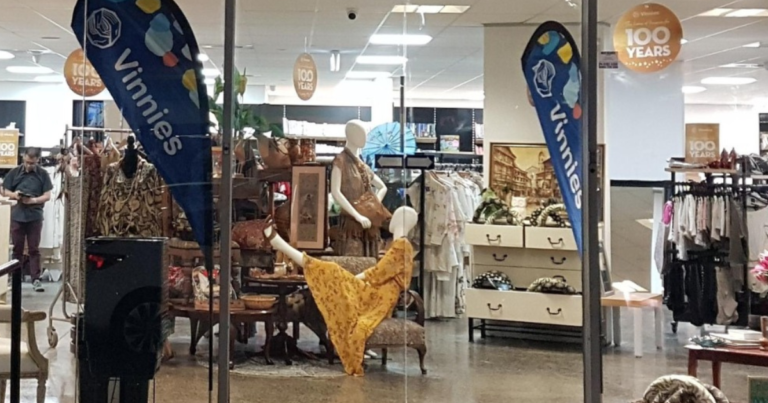
Look for vintage and classic. Not fast and disposable.
The question to ask at every item is: was this made to last? Pieces designed in the 1950s through the 1980s were often built to a quality standard that no longer exists at the same price point. Teak sideboards, brass fixtures, hand-thrown ceramics, upholstered chairs with solid timber frames — these are the category. Flat-pack furniture that's done one decade of work has no second life to offer.

Unique over trendy. Always.
Trends at an op-shop are a trap. If something looks like what's currently in every interior design feed, it was already produced at scale and will look dated in two years — used or new. What you're hunting for is the thing that doesn't belong to any particular moment: a form that is simply resolved, a material that will last a lifetime. Those pieces don't age. They accumulate meaning.
Timeless reads as taste.

Skip no section. Go through everything — twice.
Treasures are not organised by their value. A signed ceramic sits next to a chipped mug. A hand-embroidered tablecloth is folded under a synthetic blanket. A brass candlestick is in the kitchen section because someone didn't know where else to put it. Walk every aisle. Pick things up. Turn them over. Come back before you leave — something will catch your eye the second time that you walked past the first. Patience is the method, don't rush decisions but be aware if something really speaks to you, you have to buy it right then, or you won't see it again.

Choose materials that age well.
Natural materials improve with time. Everything else deteriorates. This rule alone will filter out 85% of the wrong choices before you've picked anything up.
Think brass, solid timber, leather, linen, cashmere, wool, cotton, suede, ceramic (handmade or that marked an era), stone, marble, velvet, etc
A note on value. Some objects don't just hold value — they grow it. Crystal glassware, fur, ebony woods, and anything no longer in production are categories worth learning. Their scarcity is real. If something like this surfaces in good condition, understand its worth before you walk away.

The skip list
Old electronics. Unless they are purely decorative and you understand the condition, they belong to someone else's problem.
Intimate pieces — pillows, mattresses, underwear, open cosmetics. Some categories simply don't transfer well.
Anything that was mass-produced and cheap when new. A low-quality item doesn't improve with age. It just gets older.
Trend-driven pieces. If it was made to look like the moment rather than outlast it, it's already past.
"Buy less. Choose well. Live it."
Op-shopping is not about filling a space. It's about finding objects that already have a life — and deserve the stand to tell their story, in a new scenario. The homes that feel most considered are rarely the ones with the largest budgets. They're the ones where every object was chosen with the next twenty years in mind.
Want to learn to design your own home the professional way?
We are currently building Alchemy Academy . Our platform teaches the principles designers use to make considered choices — including how to source, curate, and style with confidence. Stay tuned!


Comments